Under our historical non-oil tax-platform arrangement, the Revenue Authority paid a service fee equal to 2% of the taxes collected through the platform, with that fee divided between Crawford and the Ministry of ICT.
The 75/25 division applied to the 2% service fee, so an accurate account of the arrangement must identify the amount being divided before describing either recipient’s share.
Download graphic ↓
A $100 worked example
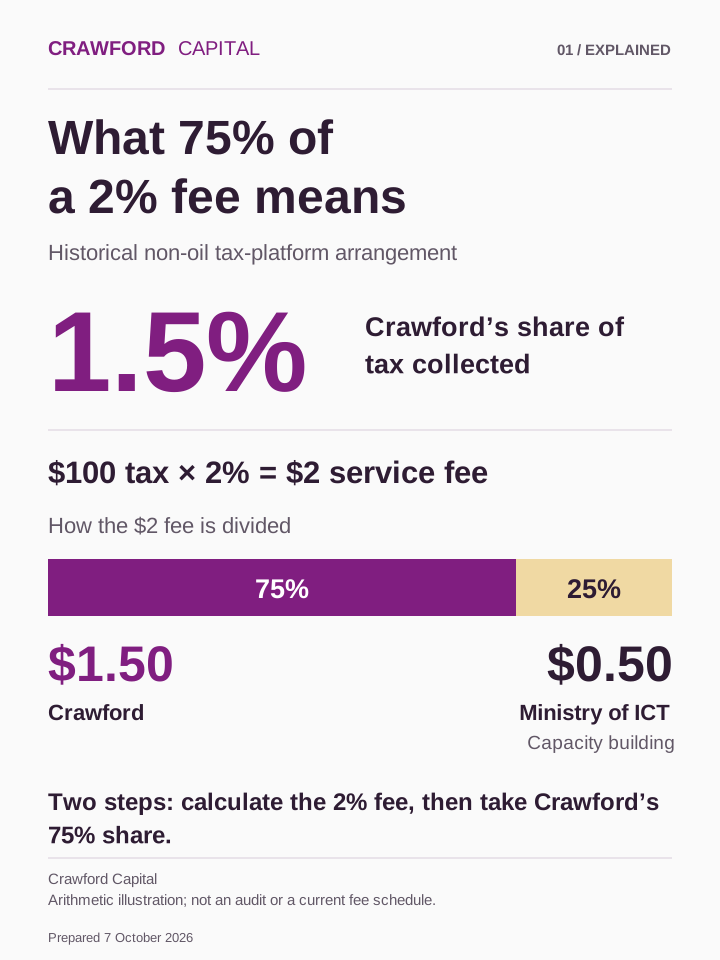
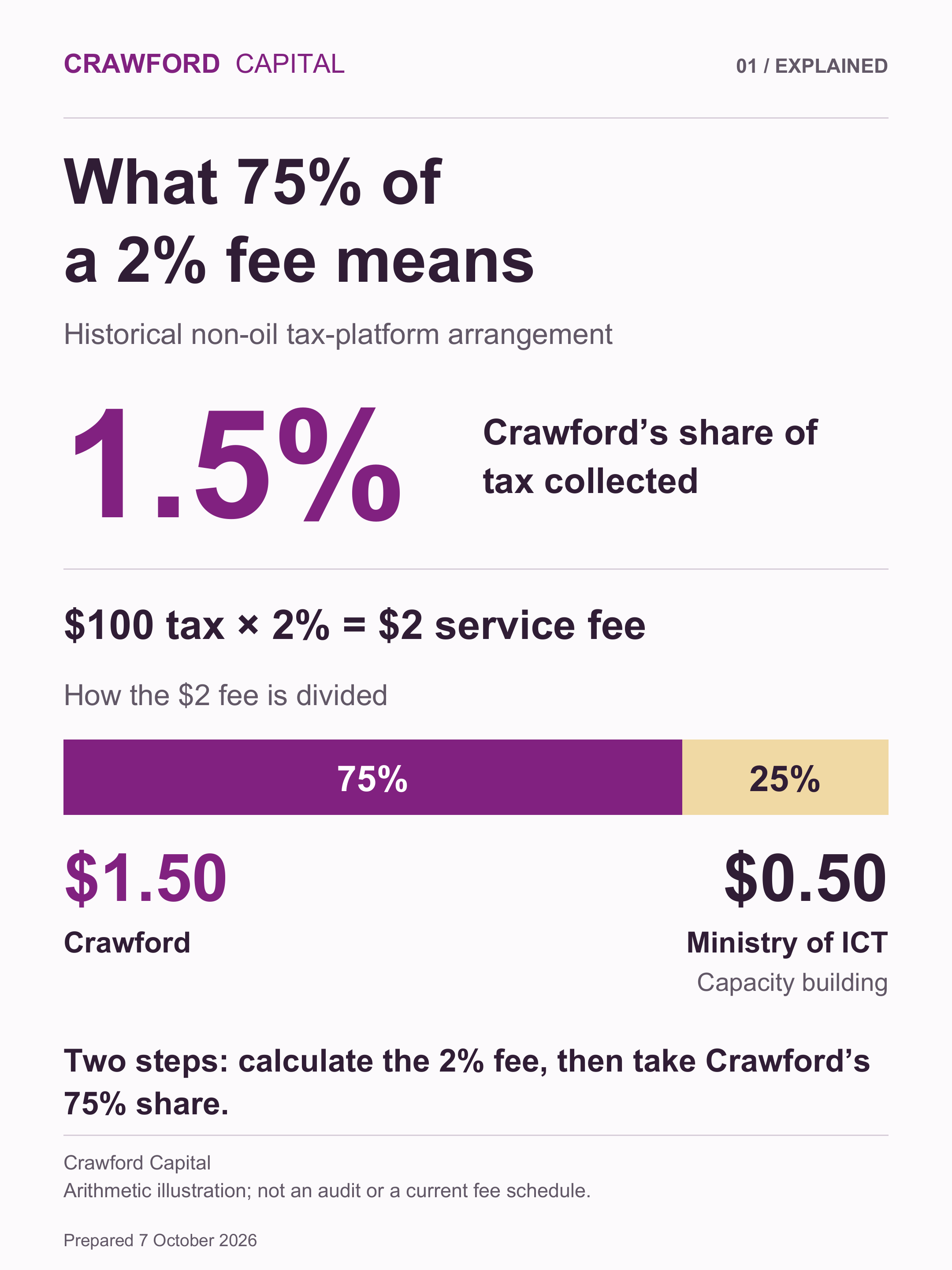
For $100 in tax collected through the platform, the 2% calculation produces a $2 service fee, which is the amount used for the subsequent division between the two recipients.
Crawford’s 75% share of that $2 fee is $1.50, while the Ministry of ICT’s 25% share is $0.50 for capacity building under the arrangement described here.
Expressed against the original $100 tax amount, the two shares are therefore 1.5% for Crawford and 0.5% for the Ministry of ICT, together making up the 2% fee.
Who paid the fee
The Revenue Authority paid the service fee under the arrangement, rather than adding a separate 2% platform surcharge to the taxpayer’s bill on top of the tax due.
The fee funded the technology arrangement when the Revenue Authority could not pay for the system upfront, with payment calculated by reference to taxes collected through the platform.
What the calculation covers
This example concerns the historical non-oil tax-platform fee, and it should not be applied to oil levies, an e-visa convenience fee or every government payment associated with a digital service.
The calculation explains how the agreed percentages work, while the applicable contract, fee schedule and transaction records establish the terms, dates and amounts for any particular accounting period.