An e-visa payment can contain two amounts with different purposes: the government charge for the visa and a convenience fee supporting the digital system through which the application is made.
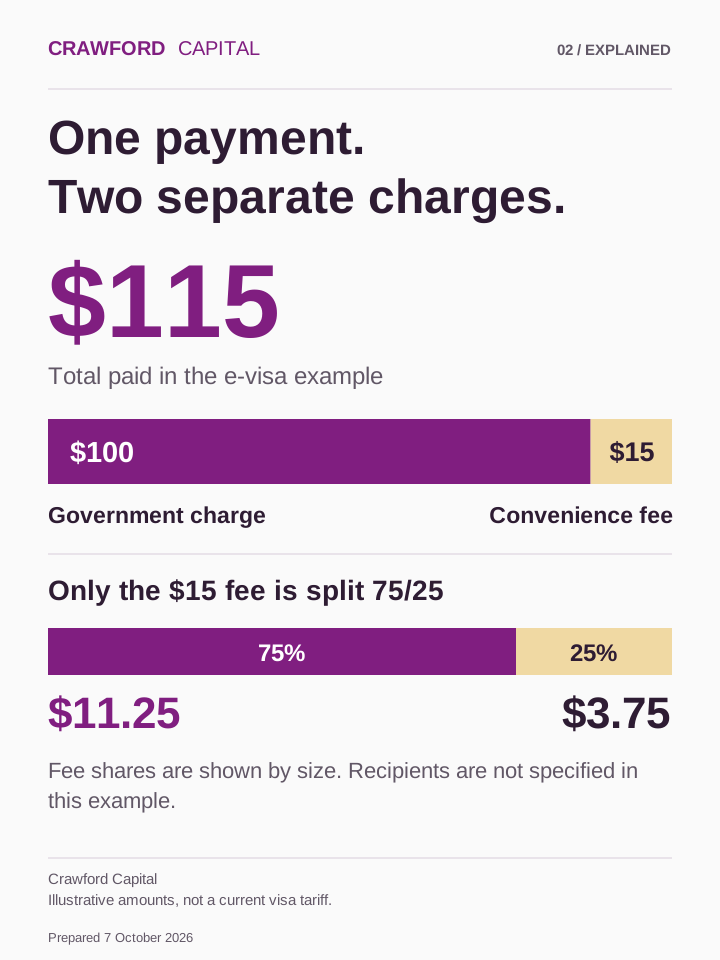
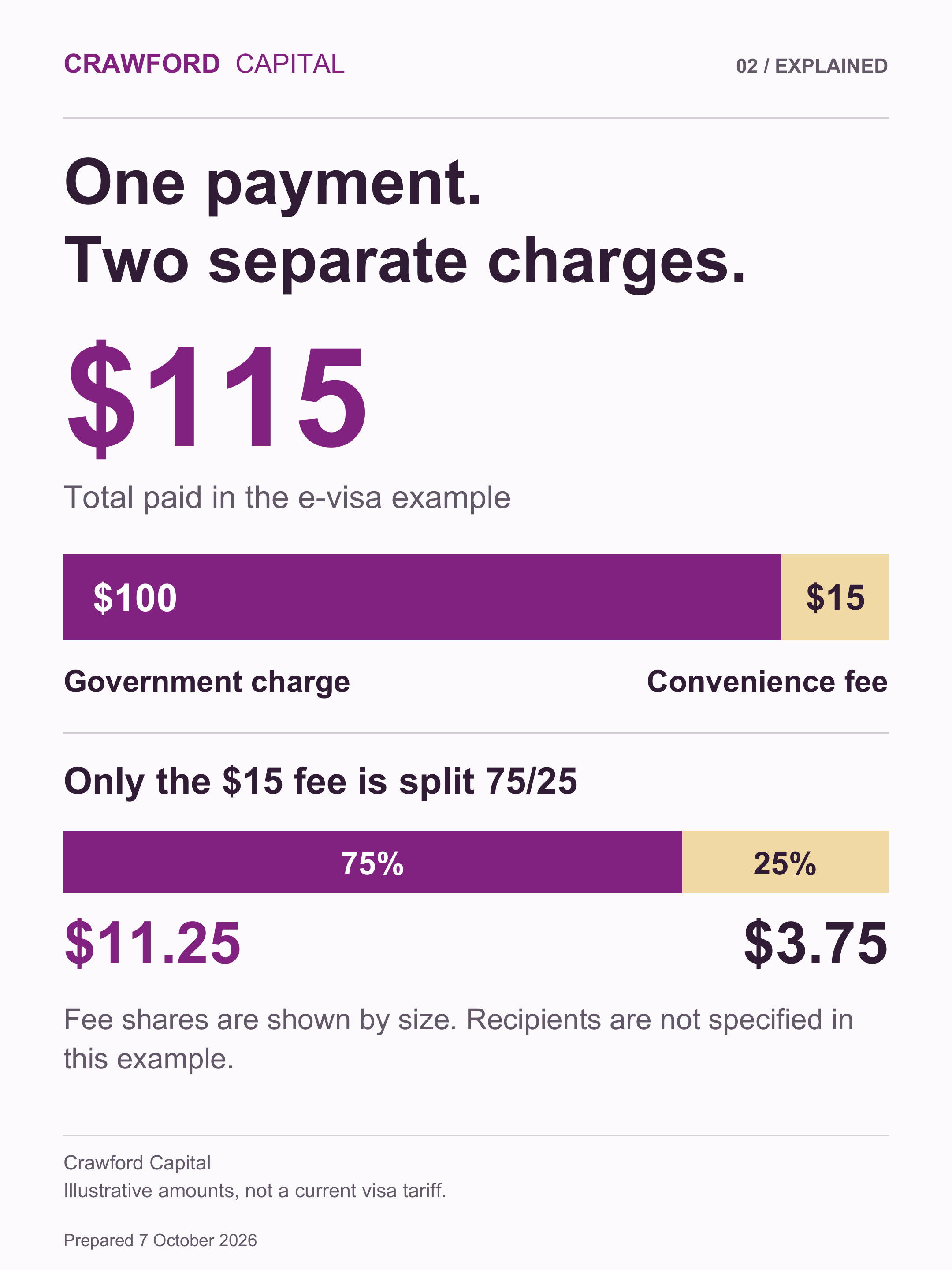
In the example used here, the government charge is $100 and the convenience fee is $15, bringing the applicant’s total payment to $115 for the application.
Download graphic ↓
The amount being divided
The 75/25 division applies to the additional $15 convenience fee, producing shares of $11.25 and $3.75, while the $100 government charge remains a separate part of the payment.
The example establishes the size of those two shares without allocating the larger share to a named recipient, so it should not be used to assign either amount to a particular party.
What the convenience fee supports
The convenience-fee arrangement supports continued operation and maintenance of the system, together with recovery of the company’s investment over time as the digital service remains available to applicants.
For someone living far from an embassy, being able to submit an application online can remove the need for a separate flight, drive or train journey just to complete that step.
The time and travel costs avoided depend on the applicant’s location and the service requirements, which is why the practical benefit should be described without promising a fixed saving to everyone.
Understanding the total before applying
The $100 and $15 amounts illustrate the fee structure rather than establish a current visa tariff, and an applicant should use the applicable service’s current fee schedule when calculating what is payable.
The tax-platform arrangement is different because the Revenue Authority paid a fee based on taxes collected through that platform, while this example describes an additional convenience fee paid by the visa applicant.